
Learning the times tables by heart, without stress
Knowing the times tables by heart makes a lot of later maths easier, from division to fractions. Most children get there with a little practice often, the easy tables first and a grown-up who stays relaxed.
What “by heart” means
The answer comes straight away. 7 × 8 is 56, without counting on fingers. Working facts out with tricks is a fine way to learn them, but the goal is that your child simply knows them, so their attention is free for the problem itself.
A little, often
A few minutes on most days works better than an hour once a week, because practice spread out over time is remembered better. Pick a regular moment, like after school, and stop while it’s still fun. A missed day doesn’t matter.
Easy tables first
Start with the tables that have a pattern: × 1 (the number stays the same), × 10 (add a zero), × 2 (double it) and × 5 (the answers end in 0 or 5). Then show that 3 × 7 is the same as 7 × 3. That covers most of the grid, and only 21 facts are left, from 3 × 3 up to 9 × 9.
How MathMatrix helps
A round is 10 to 12 multiple-choice questions, with no timer. The app remembers every answer and brings back the facts your child finds hard. After a miss, it shows a short way to work the answer out from a fact they already know. When a fact is known by heart, it becomes a heart gem in the 10×10 grid, so you can both see the progress.
When a whole table is learned, its number boss unlocks. Boss fights are the only timed part of the app. If they feel too fast, turn on Calm boss fights in Settings. Stars earned by playing buy hats, pets and outfits for your child’s own math buddy, and there are no leaderboards.
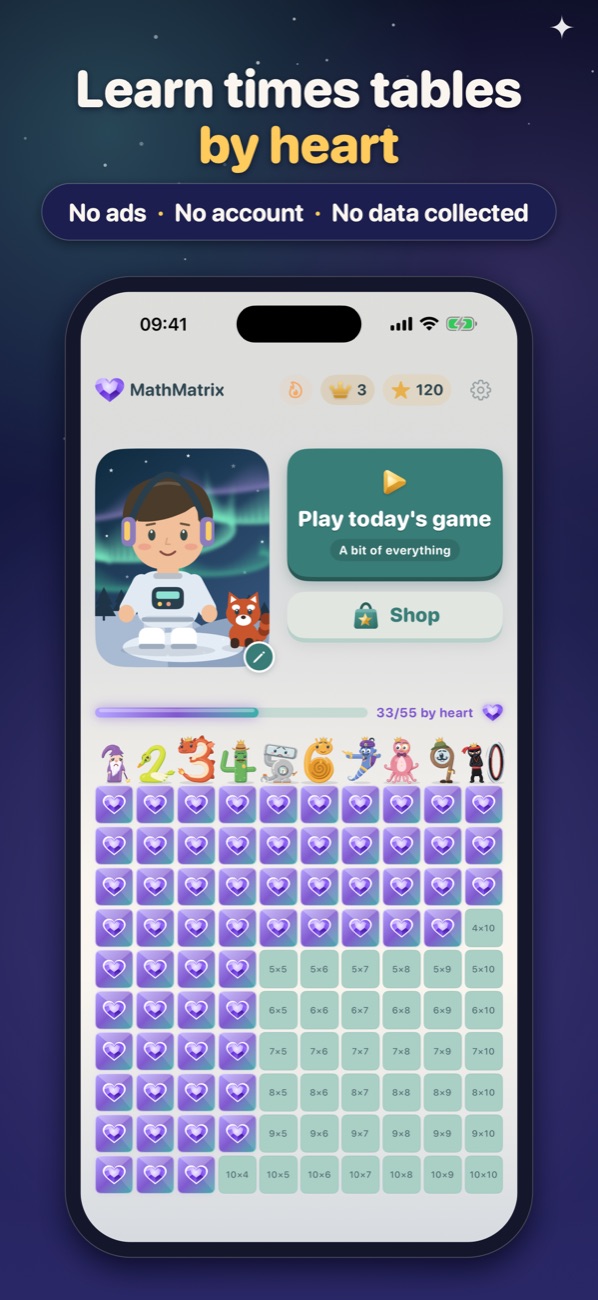
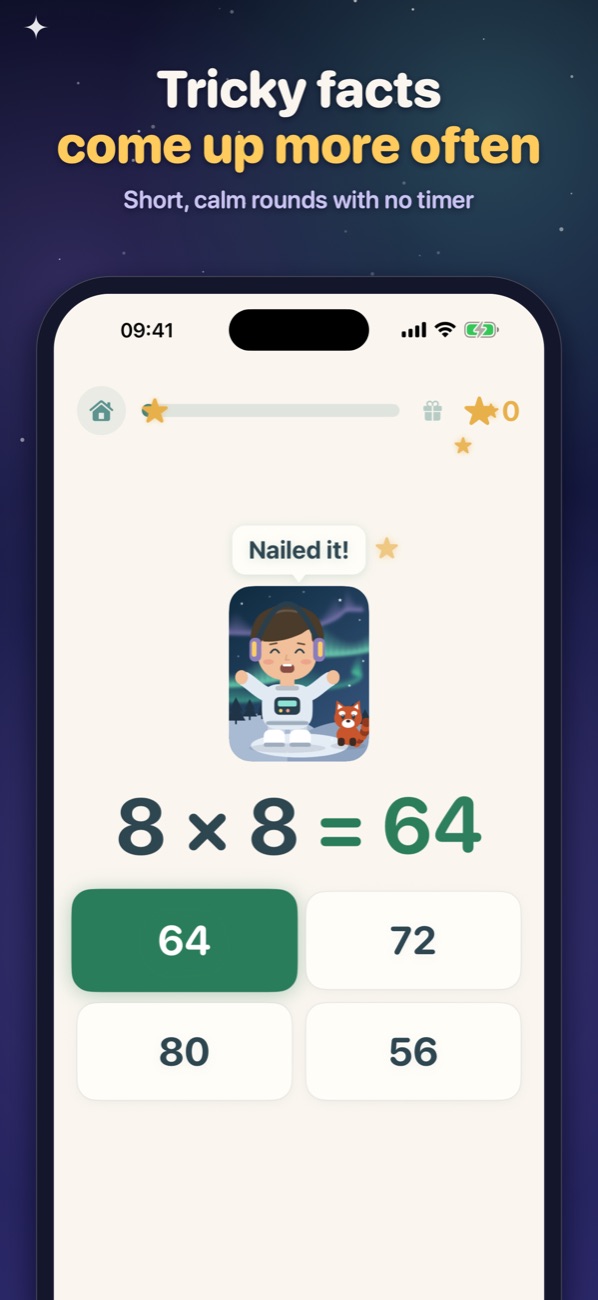
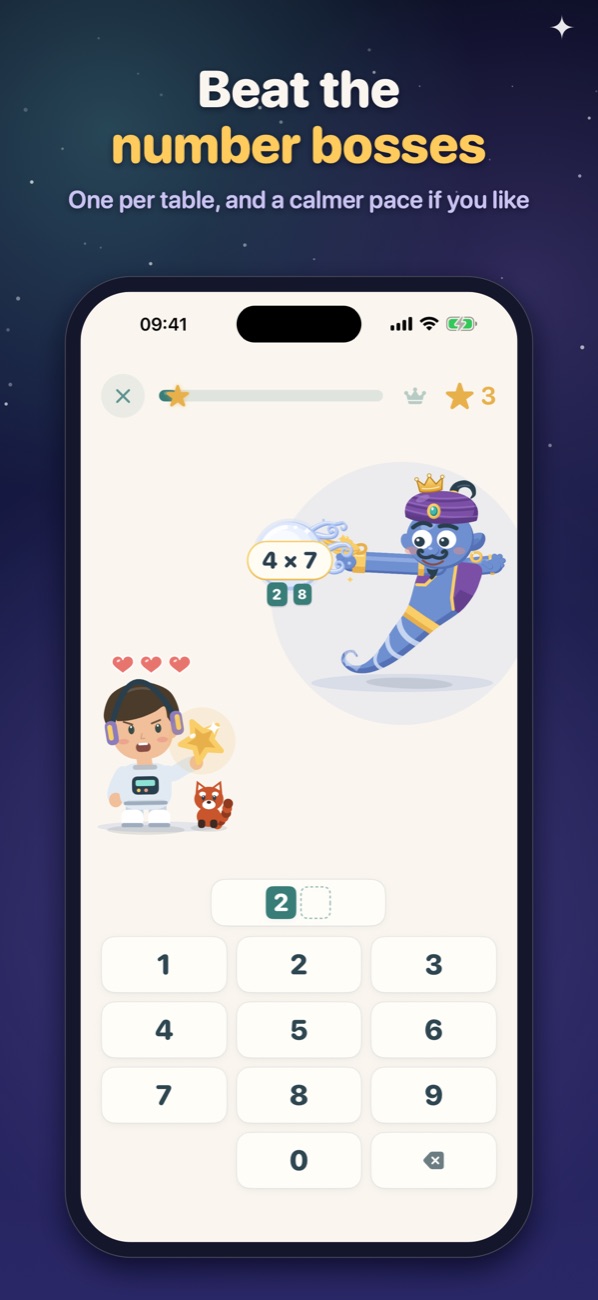
Screens and your part
We think a few minutes on a screen is plenty for this. Norway’s health directorate advises at most 1–1.5 hours of leisure screen time a day for ages 6–12, and none in the last hour before bed. Sit with your child for the first round, ask about the hearts rather than the speed, and mix in paper sheets and everyday questions like “how many legs do three dogs have?” Research suggests anxious homework help can backfire, so keep it light. The sources are on our research page.
Privacy
No ads, no purchases, no accounts and no data collected. Your child’s progress stays on your device. The details are in the privacy policy.
Questions parents ask
How long does it take?
It varies. For many children the whole grid takes a few months of short practice. The grid shows real progress, so you don’t have to guess.
What age is it for?
Ages 6–8, when most children meet the times tables. Older children who are still learning them are welcome too.
Does it cover the 11 and 12 times tables?
No. It covers 1×1 to 10×10, like our printable sheets.
Can siblings share a device?
Yes. Up to four children can each have their own profile on one device.
A calm times tables app with no ads
MathMatrix is free at launch, with nothing to buy and no data collected.
Coming soon on the App Store